
What Your Write-Off Report May Be Telling You About Your AR Process

What Your Write-Off Report May Be Telling You About Your AR Process A balance is written off. The account disappears from active AR. The report looks a little cleaner. And the team moves on. But what if the write-off is telling the practice something worth examining? Write-offs are often viewed as the final stage of […]
Why Unapplied Payments Should Never Sit Unreviewed

Why Unapplied Payments Should Never Sit Unreviewed The payment arrived. The money is in the practice’s account. But no one can confidently say which patient, claim, or service it belongs to. That is where an unapplied payment becomes more than a posting task. Until the payment is correctly matched and reconciled, the financial picture may […]
The Difference Between a Denial, Rejection, and Underpayment—and Why It Matters
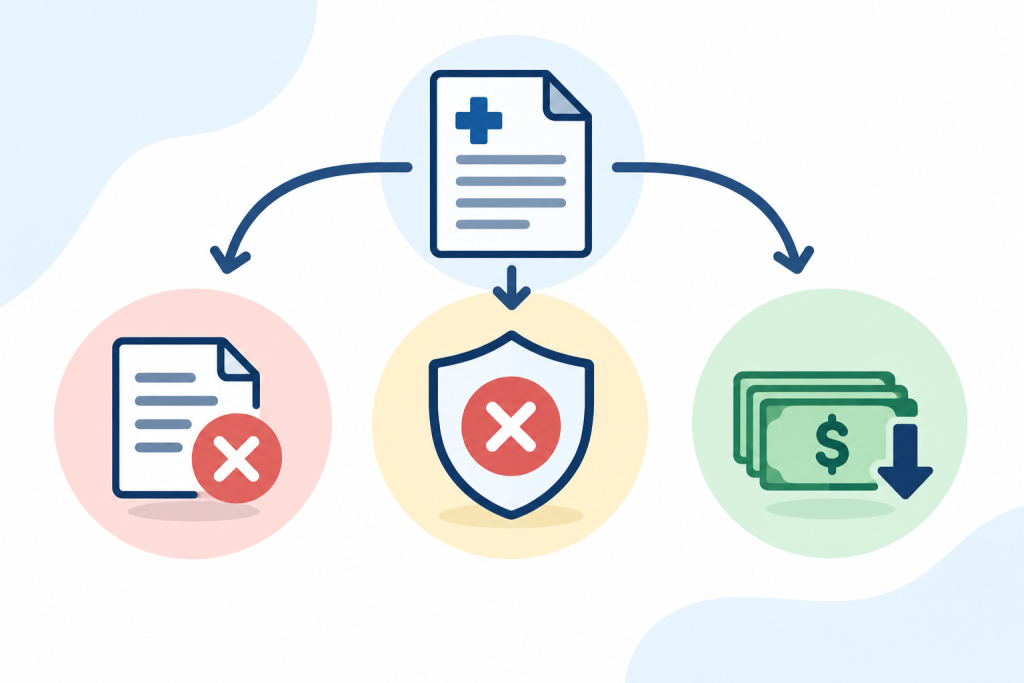
The Difference Between a Denial, Rejection, and Underpayment—and Why It Matters A claim has a problem. But what kind of problem? Was it rejected before it could be properly processed? Was it processed and then denied? Or did the payer issue payment, but for less than the practice expected? To a busy medical billing team, […]
Why Secondary Claims Become an AR Blind Spot

Why Secondary Claims Become an AR Blind Spot A primary claim gets paid. The payment is posted. The account looks better than it did before. But there is still a remaining balance. For many medical practices, this is where secondary claims can quietly become an AR blind spot. The primary payer may have completed its […]
Underpayments: The AR Problem Medical Practices Can Easily Miss

Underpayments: The AR Problem Medical Practices Can Easily Miss A claim gets paid. The payment posts successfully. The account no longer looks like a denial. At first glance, everything appears to be moving in the right direction. But there is another AR problem that can be much easier to overlook: The payer paid the claim, […]
Why Zero-Pay Claims Should Never Be Treated as “Just Another Denial”

Why Zero-Pay Claims Should Never Be Treated as “Just Another Denial” A claim comes back from the payer. The payment is $0. For a busy medical billing team, it can be tempting to place the account into the same workflow as every other unpaid or denied claim: review the reason, make a call, correct something, […]
When Internal AR Confusion Reaches the Patient
07/30/2026 The Connection Between AR Accuracy and Patient Trust Many accounts receivable challenges begin quietly. A note is incomplete. A payer response is not clearly documented. A payment is posted but the account status is not updated. A task is transferred without enough context. A denial is reviewed, but the next action is not clearly […]
When Follow-Up Becomes Repetition Instead of Progress
06/23/2026 When Follow-Up Becomes Repetition Instead of Progress Follow-up is one of the most common actions in AR work. It is how teams check claim status, confirm payer responses, request missing information, review documentation, and keep accounts from being forgotten. But follow-up alone does not always mean progress. An account can be followed up multiple […]
From Activity to Movement: A Better Way to See AR Work
05/08/2026 From Activity to Movement: A Better Way to See AR Work In AR, there is no shortage of activity. Accounts are reviewed.Follow-ups are sent.Statuses are updated.Escalations are made. The work is constant. But constant work does not always lead to consistent progress. What we often focus on Across most workflows, the focus is on […]
Why Escalations Still Don’t Work: When Urgency Doesn’t Create Movement
05/05/2026 Why Escalations Still Don’t Work: When Urgency Doesn’t Create Movement When accounts don’t move, teams escalate. It feels like the right step. More visibility.More urgency.More attention. Escalation is supposed to push the account forward. But there are times when even escalation does not change anything. Why escalation feels like a solution Escalation signals importance. […]